Hey everyone, if you’re in the market for machine stretch film (or you’re just curious about why that roll on your warehouse forklift is such a big deal), let’s cut to the chase. As a supplier who’s been around this industry for way too many years (like, I still remember when hand stretch was the only game in town, not this fancy automated stuff), I’ve seen firsthand how skipping proper packaging requirements for stretch film turns into a disaster faster than you can say “load shift.” A customer last year shipped a pallet of auto parts cross-country, and their generic packaged stretch film arrived half-unwound, stuck to itself, and useless. That cost them thousands in returns, not to mention the mad scramble to restock. So today, I’m breaking down exactly what you need to get right with machine stretch film packaging—no jargon, no fluff, just real stuff that keeps your product safe and your bottom line intact. Machine Stretch Film
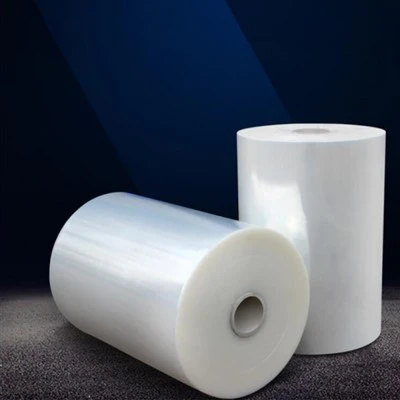
First off, let’s start with the obvious but often overlooked: the core of the packaging is the film roll itself, and how it’s contained. Machine stretch film isn’t like hand stretch that you yank off a small roll for one pallet. These rolls are bigger—think 1,000 to 3,000 feet long, 3 to 6 inches wide sometimes, and weighing 20 to 50 pounds each. If you don’t package these heavy babies right, they’re gonna get banged up before they even hit your production line. I’ve had customers tell me their rolls came with edges all crumpled, or the core cracked, and that meant the film wouldn’t feed right through their wrapping machine. A cracked core might sound minor, but when you’re running a machine that spits out 50 pallets an hour, one bad roll will jam the whole line, costing you downtime. So what’s non-negotiable here? The core needs to be properly reinforced, not just a flimsy cardboard tube. We use double-walled corrugated cores with a plastic liner on the inside—stops moisture from warping the cardboard, and makes it easy to slide onto the machine’s spindle. Then, each individual roll gets wrapped in a thick, puncture-resistant poly bag. Thin poly bags? They tear open in transit, exposing the film to dust, humidity, or even rain. Last month, a customer in Florida ordered a batch during hurricane season, and their rolls that were wrapped in our standard 2mm poly bag were totally fine, while the ones from a competitor that used 1mm were moldy on the inside. That’s the kind of detail that separates a good supplier from one that leaves you holding the bag.
Next up, stacking and unitizing those individual rolls when you ship them to your facility. You don’t just toss 10 rolls on a pallet and call it a day—there’s a science to this. Machine stretch film rolls are cylindrical, so if you stack them vertically like cans of soda, the ones on the bottom will get crushed under the weight. I learned that the hard way early on: I shipped a test order to a local warehouse, and half the rolls were dented so bad they couldn’t be used. Now we spec that rolls have to be stacked horizontally, side by side, in rows on the pallet, not piled on top of each other. We also use corner protectors—heavy-duty plastic or cardboard ones at each corner of the pallet—to stop forklift tines from puncturing the outer packaging. And don’t skip the stretch wrap around the pallet that holds the rolls together. Wait, ironic, I know, but it’s true. That outer stretch wrap needs to be tight enough to keep the rows from shifting during shipping, but not so tight that it crushes the rolls. We test every pallet we ship with a small tilt test—if you can tilt the pallet 15 degrees and no rolls move, it’s good. If they slide? You need more wrap. Also, the pallet itself has to be the right size. No half-sized pallets that leave rolls hanging over the edge—they’re gonna get knocked off when the forklift turns. Standard 48×40 inch pallets work for most orders, but if someone needs custom sizes, we adjust everything else to match, not the other way around.
Now, let’s talk about environmental factors, because this is huge but so many people sleep on it. Machine stretch film’s big selling point is its tensile strength—it stretches tight to hold pallets together. But if it’s exposed to too much humidity, extreme cold, or UV rays, that strength goes out the window. Let’s break it down. First, humidity: if the film gets wet, the plastic molecules break down. A roll that’s fine in a dry warehouse can lose 20% of its tensile strength after just 48 hours in 90% humidity. That’s why the individual poly bag we use isn’t just a barrier—it’s a moisture barrier. For customers shipping to areas with high humidity or coastal climates, we add a desiccant packet inside each roll’s bag. It sounds small, but it absorbs any leftover moisture in the packaging that would condense during shipping (temperature changes cause condensation, trust me). Then there’s temperature: machine stretch film gets brittle in cold weather. If you’re in a place where winter temps drop below freezing, the film can crack when it goes through the wrapping machine. So for those orders, we spec that the outer packaging has a layer of foam insulation around the pallet, not just cardboard. We also add a label on each roll that says “keep above 32°F until use” so customers don’t pull a roll straight from a cold loading dock into their warm production line and wonder why it’s breaking. UV rays are another one—if the film is going to be stored outside (maybe a customer has an open warehouse yard), we add UV-stabilizers to the film itself, and then wrap the entire pallet in black, UV-resistant stretch wrap instead of clear. Clear wrap lets sunlight hit it, breaking down the plastic in a week or two; black blocks the UV, so the film stays strong for months.
Wait, I should mention labeling too—this isn’t just a “decorative” step. So many suppliers slap a tiny barcode on a roll and call it a day, but good packaging labels are critical for machine stretch film. What needs to be on there? First, the roll’s specs: width, thickness, length, tensile strength, and cling level. If your wrapping machine is set for 5-inch wide film, and you get 6-inch rolls, it’s not gonna feed right. That’s not a supplier mistake—that’s if the label is wrong, or missing. We also put a roll number and batch code on each label, so if a customer has a bad batch, we can trace it back immediately, no questions asked. I’ve had customers call us at 7 a.m. panicking because a whole shift of wraps failed, and the first thing I ask for is the batch code. If we don’t have it because the label fell off, it’s a nightmare. Also, warning labels for handling: “heavy roll, use lift assist” (for rolls over 40 pounds), “keep dry” if we ship to a humid area, and “for machine use only” because hand stretch is way different and people sometimes mix them up. That last one is a big one—someone used our machine stretch film by hand once and complained it was too hard to yank, but they didn’t read the label. Oops.
Let’s talk about special cases, because not everyone is shipping standard pallets or storing in standard warehouses. For example, if you’re in the food industry, you need stretch film that’s food-safe, so the packaging has to be marked “FDA compliant” to prove it doesn’t leach chemicals. We work with a lot of food distributors, so all their rolls get that label front and center, and the poly bag is made from food-grade plastic, not regular industrial poly. Another case: if you’re shipping really heavy loads—like 2,000 pound pallets of construction materials—you need film with higher tensile strength, and the pallet packaging has to hold up to heavier forklift use. We use extra-thick corner protectors and double wrap the pallet for those orders, because a roll shifting on a heavy load can puncture the whole pallet’s wrap, leading to a damaged shipment. And for customers that store their film for a long time (I have one big retail client that orders a year’s supply at a time), we package their rolls in airtight, sealed crates instead of individual poly bags, so they don’t get exposed to dust or humidity over months of storage. That’s a custom thing, but we do it all the time because we know storing film improperly is just as bad as packaging it wrong.
Let me circle back to that early story I told you about the auto parts customer. The problem there was that they bought generic stretch film from a supplier that just threw rolls on a pallet, no corner protectors, thin poly bags. The rolls got dented during shipping, so when they put them on their machine, the film didn’t feed evenly, so the wraps were loose. Their mistake? They didn’t ask their supplier about packaging requirements—they just ordered by price, not by how the film was going to be delivered. That’s why it’s so important to ask the right questions when you’re buying machine stretch film: “How are the rolls packaged?” “What kind of poly bag do you use?” “Do you have insulation or corner protectors for shipping to humid/cold areas?” If a supplier can’t answer those, run. We answer those questions every time, because this is what we do.
Look, I get it—when you’re running a business, you’ve got a million things to worry about, and packaging for stretch film might feel like a tiny detail. But trust me, it’s not. A few extra dollars on proper packaging saves you from thousands in damaged goods, downtime, and angry customers. I’ve seen it a hundred times, and helped fix it just as many. If you’re tired of dealing with stretch film that arrives damaged, doesn’t feed right, or fails mid-wrap, let’s chat. We don’t do generic, one-size-fits-all packaging—we tailor it to your business, your location, your equipment, and the loads you ship. Whether you need a small order for a local warehouse or a bulk order for a nationwide distributor, we’ve got you covered. Shoot us a message to get the ball rolling, no pressure, just honest advice and a solution that works for you.

Wait, before I go, let’s recap the big takeaways so you don’t forget: 1) Individual rolls need reinforced cores, thick poly bags, and protection from bends/dents. 2) Stack rolls horizontally on pallets, use corner protectors, and tight outer stretch wrap to prevent shifting. 3) Account for humidity, temperature, and UV rays in your packaging based on your location and storage conditions. 4) Clear, accurate labels with specs and handling warnings are non-negotiable. 5) Custom packaging for special cases (food-grade, long storage, heavy loads) makes all the difference. That’s it. No fancy stuff, just the real deal from someone who’s been in the trenches with this stuff for years. Now go check your next stretch film delivery—you’ll probably spot a thing or two that could be improved. And if you need help making it right, hit me up.
Weed Barrier Fabric References:
- Industrial Packaging Association. (2022). Best Practices for Packaging and Shipping Flexible Packaging Materials.
- Stretch Film Manufacturers Association. (2021). Guide to Machine Stretch Film Handling and Storage Requirements.
- Global Logistics and Supply Chain Council. (2023). Environmental Factors Impacting Packaging Integrity in Industrial Shipments.
- Food and Drug Administration. (2020). Guidance for Food Contact Substances in Flexible Packaging Materials.
Linyi Dongyi Import&Export Co., Ltd.
As one of the most professional machine stretch film manufacturers and suppliers in China, we offer a wide range of products with superior quality. We warmly welcome you to wholesale bulk customized machine stretch film from our factory. If you have any enquiry about quotation, please feel free to email us.
Address: 4 F, Zone A, Zhangjia Zhuxu Village, Lanshan District, Linyi City.
E-mail: donglai01972@gmail.com
WebSite: https://www.donglaipack.com/
